
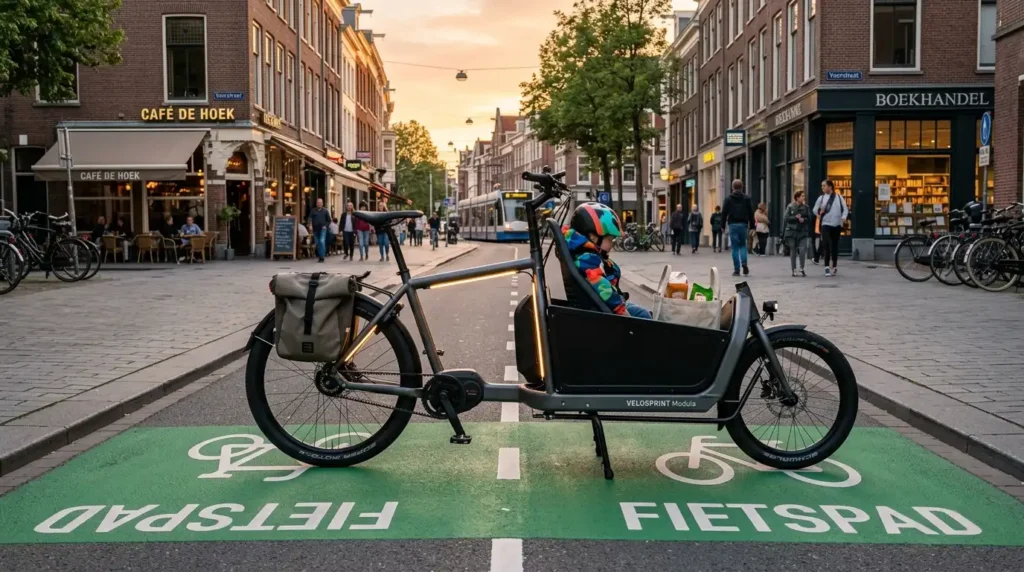
Urban transportation is undergoing a profound structural shift. As metropolitan centers worldwide struggle with traffic gridlock, parking shortages, and strict emissions limits, city dwellers are seeking practical alternatives to single-occupancy automobiles. While standard electric bicycles solved the commute for millions, a new generation of utility transportation is taking center stage: modular e-bikes and urban cargo mobility systems.
No longer restricted to rigid, single-purpose frames, modern utility e-bikes offer adaptable, multi-functional platforms capable of transporting heavy groceries, multiple children, or commercial delivery loads. Paired with expanding urban cargo lanes and smart municipal micro-mobility infrastructure, modular e-bikes are officially transitioning from niche lifestyle products to essential urban transit tools.
What Are Modular E-Bikes? Flexibility Beyond the Single-Purpose Frame
For decades, purchasing a bicycle meant choosing a single archetype: a road bike, a commuter, or a dedicated cargo bike. Modular e-bikes eliminate these boundaries by utilizing heavy-duty frame architectures equipped with universal quick-connect mounting systems, dual-battery configurations, and high-payload rear racks.
The core appeal of a modular setup lies in its versatility throughout a single day:
- Morning School Drop-offs: Transform the rear rack with dual passenger seats, safety rails, and footrests to transport two children safely.
- Midday Commercial Use: Detach child seats in seconds to install insulated thermal cargo boxes for courier or local delivery work.
- Evening Commutes & Errands: Swap in wide wire baskets or pannier bags to comfortably carry heavy grocery runs or personal gear home.
By offering a single vehicle that scales dynamically to meet daily obligations, modular e-bikes eliminate the need for secondary household vehicles, drastically reducing urban car ownership costs.
Drivetrain Innovations: Belt Drives and Internal Gear Hubs
A primary friction point for daily commuters using traditional bicycles is maintenance. Traditional steel chains require frequent degreasing, lubrication, and adjustment, while external derailleurs remain vulnerable to impact damage and weather exposure.
To withstand the high torque generated by powerful mid-drive motors and heavy cargo loads, modern modular e-bikes increasingly rely on automotive-grade drivetrain technologies:
- Carbon Belt Drives: Synthetic carbon fiber belts replace greasy metal chains. High-end utility models utilizing Gates Carbon Belt Drive systems require zero oil lubrication, will not rust in wet weather, and last up to three times longer than standard bike chains, keeping work clothes spotless.
- Internal Gear Hubs (IGH): Instead of exposed cassette cogs, gear systems are completely sealed inside the rear wheel hub or mid-drive gearbox. Riders can shift gears effortlessly while completely stopped at red lights—an essential feature when balancing a fully loaded cargo bike on an incline.
- Automatic Electronic Shifting: Advanced e-bike systems integrate smart sensors that automatically adjust gear ratios based on cadence and terrain slope, ensuring smooth motor assistance without manual gear grinding.
Smart Technology, Radar, and Connected Security
As utility e-bikes become primary transport assets, rider safety and theft prevention are paramount. Technological integration in modern e-bikes extends far beyond simple battery monitors.
Today’s utility e-bikes incorporate advanced safety and connectivity arrays, including rear-facing radar sensors that alert riders to fast-approaching motor vehicles via handlebar displays or haptic grips. Built-in GPS telemetry provides real-time location tracking, automated geofencing alerts, and remote motor-kill features that render stolen bikes completely inoperable. Furthermore, integrated high-lumen LED lighting setups—featuring brake-activated rear lights and turn signals—ensure high visibility during early morning or evening commutes.
The Evolution of Urban Cargo Mobility Infrastructure
 A heavy-duty cargo e-bike is only as effective as the urban grid built to support it. Recognizing that wide cargo bikes struggle in narrow, traditional bike lanes, progressive municipalities are investing heavily in dedicated micro-mobility infrastructure.
Metropolitan cities across Europe and North America are reshaping streetscapes to support utility cycling through several key initiatives:
- Widened Protected Bike Highways: Expanding lane widths to allow wide multi-passenger cargo bikes and commercial trikes to pass standard commuters comfortably and safely.
- Commercial Micro-Hubs: Creating dedicated urban logistics hubs where freight trucks drop off goods on city margins, transferring cargo to fleet e-bikes for final-mile neighborhood deliveries.
- Smart E-Bike Parking & Charging Lockers: Installing secure, weather-proof street lockers equipped with standardized charging ports to protect valuable utility bikes from theft and environmental damage.
- Municipal Purchase Subsidies: Local governments are enacting direct financial rebates for residents and small businesses purchasing cargo and modular e-bikes to replace carbon-emitting vehicles.
Overcoming Challenges: Weight, Regulation, and Safety
Despite rapid adoption, the expansion of heavy-duty utility e-bikes presents challenges that urban planners and manufacturers must address. Full payload e-bikes can weigh upwards of 300 to 400 pounds including cargo and rider, requiring specialized hydraulic disc brakes and reinforced frame geometry to guarantee safe stopping distances. Additionally, municipalities must maintain clear regulatory distinctions between low-speed pedal-assist bicycles and higher-speed throttle-operated mopeds to ensure pedestrian safety on shared multi-use paths.
The Future of Urban Commuting
The rise of modular e-bikes represents a fundamental redesign of how people and cargo move through urban centers. By blending the payload capacity of a small car with the nimble, low-cost efficiency of a bicycle, modular e-bikes offer an accessible path toward quieter, cleaner, and less congested cities. As urban infrastructure continues to evolve alongside battery and drivetrain technology, the modular e-bike is poised to become the cornerstone of modern city transport.