
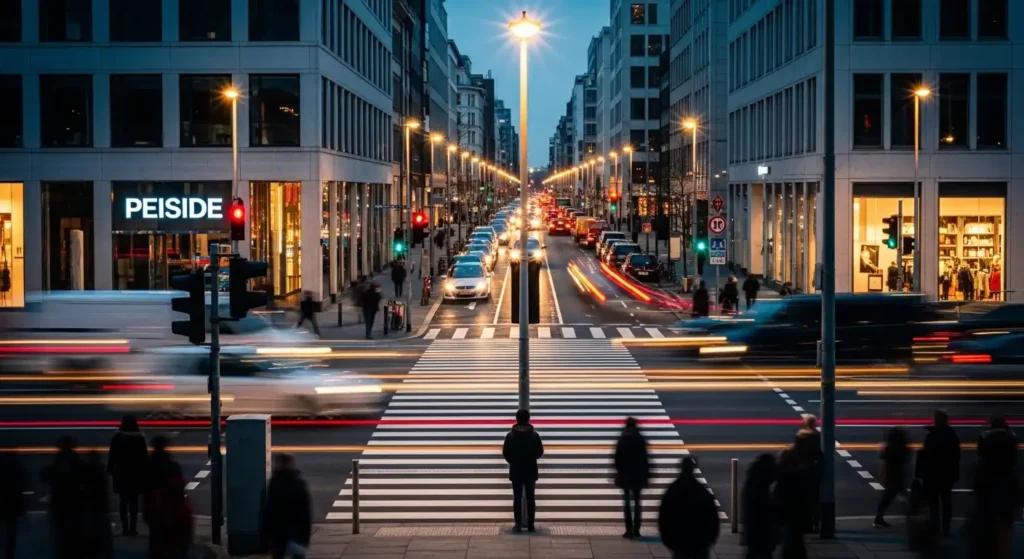
Every year, thousands of lives are changed in an instant on our roadways. While we often focus on vehicle-to-vehicle collisions, the most vulnerable road users—pedestrians—face the highest risks. Understanding the causes of pedestrian crashes is the first step toward reclaiming our streets and ensuring that “pedestrian life” is synonymous with safety and mobility.
In this comprehensive guide, we analyze the primary factors contributing to these incidents and provide actionable strategies for drivers, walkers, and urban planners to prevent them.
1. Distracted Walking and Driving: The Digital Threat
 In the modern era, the smartphone is perhaps the greatest threat to road safety. Distraction isn’t just a driver problem; it is a shared crisis. When a driver glances at a notification for just five seconds at 30 mph, they travel the length of a football field essentially blindfolded.
The Prevention:
For drivers, the solution is simple: “Hands-free” is not “brain-free.” Use “Do Not Disturb” modes while driving. For pedestrians, the “heads-up” rule is vital. Avoid wearing noise-canceling headphones while crossing busy intersections, as auditory cues are often your first warning of an approaching vehicle.
2. Speeding and the Physics of Fatality
Speed is the most significant predictor of whether a pedestrian crash will be fatal. A pedestrian struck by a vehicle traveling at 20 mph has a 90% chance of survival. At 40 mph, that survival rate plummets to less than 50%.
Higher speeds reduce a driver’s peripheral vision and increase the braking distance required to stop. In urban environments, even a 5 mph increase in speed can be the difference between a “near miss” and a tragedy.
The Prevention:
Implementing “Slow Zones” and using traffic-calming measures like speed humps and chicanes are proven methods to reduce vehicle velocity. On a personal level, drivers must adhere to the prevailing conditions, not just the posted limit—especially in rain, fog, or heavy foot-traffic areas.
3. Poor Infrastructure and “Hostile” Design
Often, a crash is not just a failure of human judgment, but a failure of design. Many suburban roads are designed as “stroads”—a dangerous hybrid between a street (where people live and shop) and an artery (where cars move fast). When crosswalks are spaced half a mile apart, pedestrians are forced to “jaywalk” out of necessity.
The Prevention:
We need to advocate for pedestrian-centric infrastructure. This includes:
- Pedestrian Refuges: Islands in the middle of wide roads that allow walkers to cross one direction of traffic at a time.
- Curb Extensions: Shortening the distance a pedestrian must spend in the “danger zone” of the street.
- Leading Pedestrian Intervals (LPI): Giving walkers a 3-7 second head start at traffic lights before cars are allowed to turn.
4. Nighttime Visibility and the “8 PM Test”
A staggering percentage of pedestrian fatalities occur after dark. Poor street lighting, combined with the glare of oncoming headlights, makes it incredibly difficult for drivers to spot pedestrians in dark clothing. This is a critical component of what we call the 8 PM Walkability Test—if a neighborhood feels unsafe to navigate at night, it effectively fails its residents.
The Prevention:
Pedestrians should opt for light-colored clothing or reflective accessories when walking at night. Cities must invest in “warm-spectrum” LED lighting that illuminates sidewalks without creating deep, dangerous shadows. If you are interested in how legal standards apply to these incidents, you can explore more on legal safety protocols and liability.
5. Left-Turn Collisions at Intersections
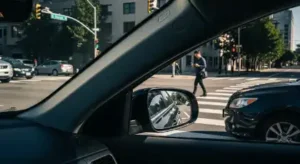 Research shows that left-turning vehicles are significantly more likely to hit a pedestrian than right-turning ones. Why? Drivers making a left turn are often focused on finding a gap in oncoming traffic and fail to look at the crosswalk they are about to enter. Additionally, the “A-pillar” of modern cars (the frame between the windshield and side window) can create a blind spot that perfectly hides a walking person.
The Prevention:
Drivers should perform a “double look” before initiating a left turn. Pedestrians should try to make eye contact with drivers before stepping off the curb, ensuring they have been seen.
6. Alcohol and Impairment
Impairment remains a leading cause of pedestrian crashes, and surprisingly, it involves both parties. Nearly half of all fatal pedestrian crashes involve alcohol consumption by either the driver or the pedestrian. Alcohol impairs depth perception, slows reaction times, and leads to poor decision-making (such as a pedestrian attempting to cross a high-speed highway).
The Prevention:
The “Designated Driver” rule applies to everyone. If you are impaired, use ride-sharing services or public transit. Walking while highly intoxicated near heavy traffic is a high-risk activity that requires the same level of caution as driving.
7. The Rise of Larger Vehicles (SUVs and Trucks)
In the last decade, the shift toward larger SUVs and light trucks has had a direct impact on pedestrian safety. Because these vehicles have higher front-end profiles, they are more likely to strike a pedestrian in the chest or head rather than the legs. They are also more likely to push a pedestrian under the vehicle rather than over the hood, leading to much more severe injuries.
The Prevention:
Automakers are beginning to implement Pedestrian Automatic Emergency Braking (PAEB) systems. However, technology is no substitute for driver vigilance. Drivers of larger vehicles must be hyper-aware of the significant blind spots directly in front of their hoods.
Conclusion: A Shared Responsibility
Preventing pedestrian crashes requires a “Safe Systems” approach. We cannot rely solely on everyone “being careful.” We must build roads that forgive human error, implement technology that assists our senses, and foster a culture that prioritizes people over speed.
Whether you are advocating for better sidewalks in Butte County or simply choosing to put your phone away while driving, every action counts. By addressing the root causes of these crashes, we can create a world where everyone can walk with confidence.
For more in-depth analysis on road safety and urban living, stay tuned to Pedestrian Life. If you’ve been affected by a road incident, understanding the forensic details of crash patterns can be a vital part of the recovery and legal process.