
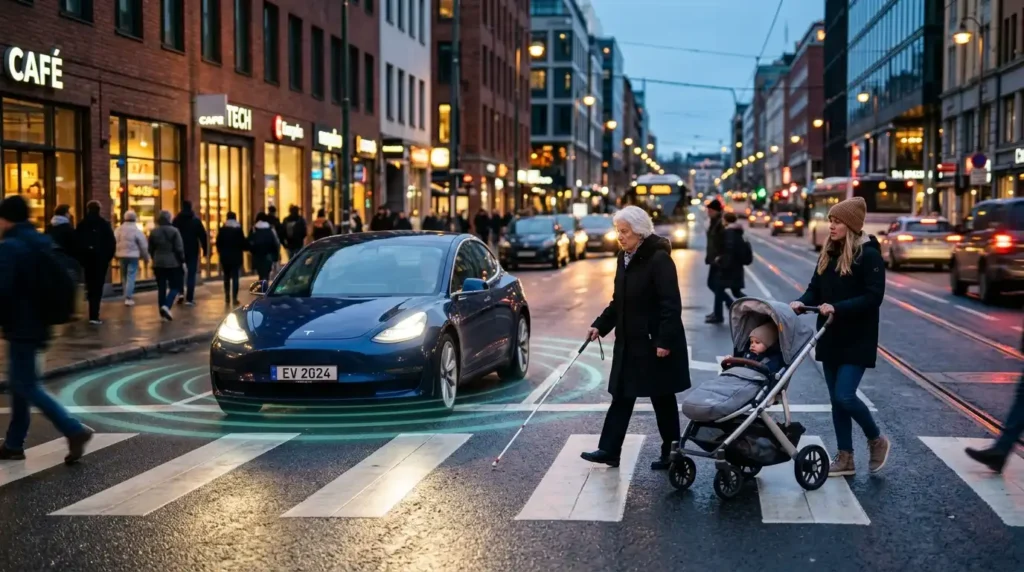
Over the last decade, the rapid shift toward electric vehicles (EVs) and hybrid automobiles has fundamentally transformed urban transportation. Quiet, tailpipe-emission-free vehicles now fill city streets, offering a smoother and cleaner ride. However, this silent Revolution introduces a critical hazard for city walkers: Silent Electric Vehicle Pedestrian Accidents.
Internal combustion engine (ICE) vehicles produce natural acoustic feedback from exhaust pipes, pistons, and transmission gears, providing pedestrians with an instinctive auditory cue long before a vehicle enters their field of vision. Pure electric vehicles and hybrids running in battery-only mode operate almost silently at low speeds. When an EV maneuvers through a parking garage, creeps out of a driveway, or makes a low-speed turn at an intersection, vulnerable road users—especially visually impaired pedestrians, children, and elderly walkers—often have zero auditory warning of an approaching multi-ton vehicle.
The Physics of Silence: Why Low Speeds Present the Greatest Hazard
A common misconception is that electric vehicles are dangerous at all speeds. In reality, at speeds above 18.6 mph (30 km/h), tire friction against asphalt and wind resistance generate enough ambient noise that an electric car sounds virtually identical to a conventional gas-powered sedan.
The danger zone occurs entirely at low speeds (0 to 19 mph):
- Slow Crosswalk Turns: Drivers making left or right turns at green lights often coast at 5 to 12 mph, yielding minimal tire noise.
- Parking Lots and Alleys: Backing out of parking spaces or pulling past commercial building entrances relies almost entirely on pedestrians hearing an engine rumble.
- Quiet Urban Neighborhoods: Residential streets with low ambient noise levels lull pedestrians into relying on auditory checks before stepping off curbs.
National Highway Traffic Safety Administration (NHTSA) studies revealed that hybrid and electric vehicles are statistically **19% more likely to be involved in a pedestrian collision** at low speeds than internal combustion engine vehicles, with the disparity jumping even higher in parking garages and backing maneuvers.
Federal Mandates: Understanding FMVSS 141 and AVAS Standards
To combat this growing threat to public safety, regulatory bodies around the world stepped in to mandate artificial vehicle sound generators.
In the United States, the federal government enacted Federal Motor Vehicle Safety Standard (FMVSS) No. 141, officially known as the “Minimum Sound Requirements for Hybrid and Electric Vehicles.” Under this regulation:
- Mandatory Acoustic Emission: All new electric and hybrid light-duty vehicles (under 10,000 lbs) manufactured for sale must emit a continuous artificial sound when operating in forward or reverse at speeds up to 30 km/h (18.6 mph).
- Specific Frequency Ranges: The emitted sound—commonly produced by an Acoustic Vehicle Alerting System (AVAS)—must span specific acoustic frequency bands (between 315 Hz and 5000 Hz) to ensure human ears can easily locate the vehicle’s direction and speed.
- Pitch Ramping: The AVAS pitch must automatically adjust higher as the vehicle accelerates, giving pedestrians intuitive feedback on the vehicle’s speed changes.
Similar international regulations, such as UN Regulation No. 138 in Europe and Asia, enforce comparable AVAS rules to protect vulnerable road users across global markets.
Unpacking Fault and Liability in Silent EV Collisions
When an electric car strikes a pedestrian, establishing legal liability involves analyzing driver oversight, municipal road design, and potential vehicle manufacturing defects.
1. Driver Negligence and the Duty of Care
Drivers operating electric vehicles bear a heightened responsibility to remain vigilant in pedestrian-heavy areas. Because an EV driver knows their vehicle makes little to no engine noise, failing to double-check blind spots, speeding through parking lanes, or cutting closely around crosswalk corners constitutes clear negligence under state traffic laws.
2. Tampered or Disabled AVAS Systems
A growing legal issue involves vehicle modifications. Some car owners, annoyed by the futuristic “hum,” “chime,” or artificial noise emitted by their EV at low speeds, actively disconnect speaker fuses, install aftermarket mute modules, or modify software settings to silence their vehicles. If an EV driver intentionally disables a federally required AVAS system and subsequently strikes a pedestrian, this willful violation serves as compelling evidence of liability.
3. Manufacturer Product Liability (Defective AVAS Systems)
If an acoustic warning system fails to function due to faulty wiring, water intrusion into external speaker housings, or software bugs, the auto manufacturer may face a third-party product liability claim. If a vehicle fails to meet FMVSS 141 standards at the time of impact, the vehicle maker can be held liable for design or manufacturing defects.
4. Municipal and Commercial Property Liability
Property owners managing parking structures or outdoor shopping plazas with blind corners and unpainted pedestrian walkways may share liability if inadequate lighting, missing warning signage, or poor sightlines contribute to a silent EV collision.
Establishing Evidence After a Silent EV Crash
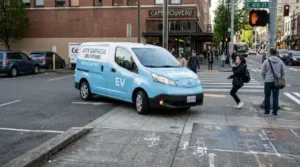
Proving fault in an injury claim involving a silent electric vehicle requires gathering specific physical, digital, and technical evidence right away:
- Inspect the AVAS Hardware: A forensic engineer or investigator must inspect the vehicle’s external speakers and wiring to verify whether the acoustic warning system was operational or tampered with at the time of the crash.
- Extract Vehicle Onboard Telemetry: Electric vehicles record extensive operational data. Extracting Event Data Recorder (EDR) logs can confirm the vehicle’s exact speed, gear engagement, braking timing, and whether the AVAS system was active.
- Gather Surveillance and Witness Audio: Nearby security cameras, dashcams, and witness statements are critical for establishing whether the vehicle gave any audible or visual indication before striking the pedestrian.
- Document Injuries and Eyewitness Sightlines: Medical records and crash scene photos showing line-of-sight obstructions help prove that the pedestrian had no reasonable way of anticipating the approaching silent vehicle.
Protecting Your Legal Rights After an EV Collision
As electric vehicles become the standard on American roadways, pedestrian safety rules and automotive regulations must continue to evolve. While quiet technology makes cities quieter and cleaner, it should never come at the expense of human safety.
If you or a loved one was struck by a silent electric car or a hybrid vehicle in a crosswalk, parking lot, or residential street, you deserve full compensation for medical expenses, lost earnings, and emotional trauma. Consult an experienced pedestrian injury attorney today to evaluate your rights, investigate vehicle compliance, and pursue the recovery you deserve.