
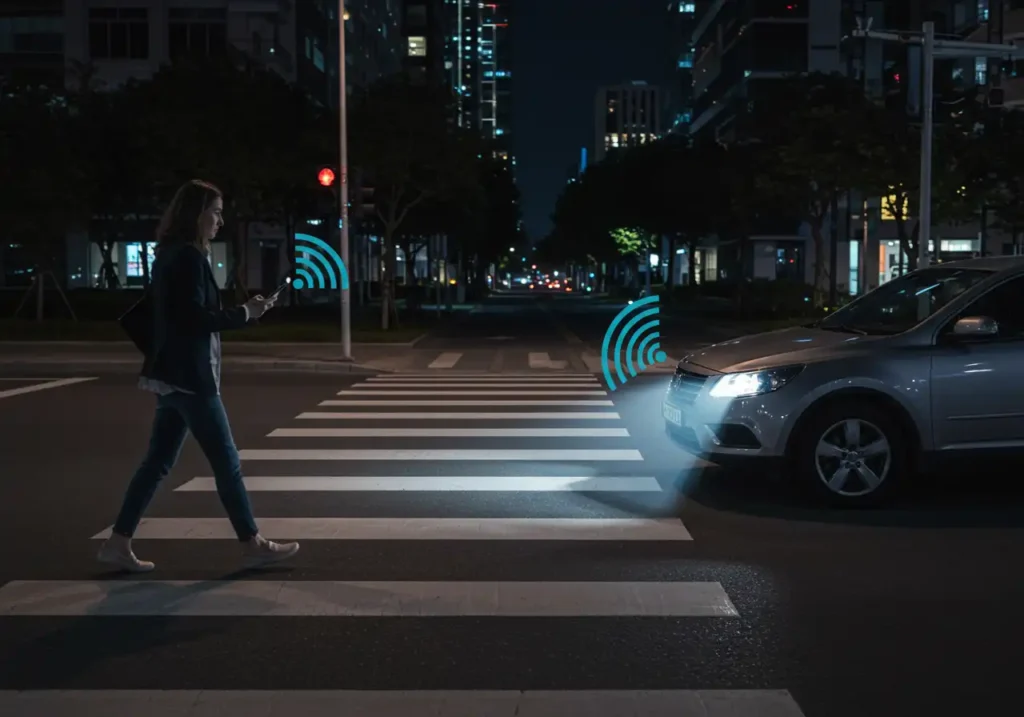
Pedestrian safety is at a crossroads. Despite better road design and awareness campaigns, pedestrian fatalities continue to rise across the United States. With the advancement of smart mobility and connected vehicle technology, a new innovation offers hope—Vehicle-to-Pedestrian (V2P) warning systems. In 2025, this technology is set to play a key role in preventing accidents and saving lives in increasingly complex urban environments.
What Are Vehicle-to-Pedestrian (V2P) Warning Systems?
 V2P warning systems are part of a broader “vehicle-to-everything” (V2X) communication framework. This system allows vehicles to communicate directly with pedestrians, cyclists, and even infrastructure to prevent collisions before they happen. Through short-range communication or cellular signals, these systems detect when a pedestrian is nearby and at risk, sending alerts to both the driver and the pedestrian.
Imagine a scenario where a distracted pedestrian steps into the road while looking at their phone. A vehicle equipped with V2P technology instantly detects the movement, issues a dashboard alert to the driver, and simultaneously sends a vibration or audio signal to the pedestrian’s smartphone. These split-second warnings can make the difference between a safe stop and a tragic crash.
How V2P Systems Work
V2P warning systems combine sensors, cameras, GPS data, and wireless communication protocols to identify pedestrians and potential hazards in real time. The process typically follows three steps:
- Detection: Vehicle sensors and cameras scan the surroundings, identifying pedestrians and tracking movement patterns.
- Communication: Data is transmitted between the vehicle and the pedestrian’s device (such as a smartphone or smartwatch) through a secure communication network.
- Warning: If the system predicts a collision risk, it sends an alert—either visually or audibly—to both parties, allowing enough time to react.
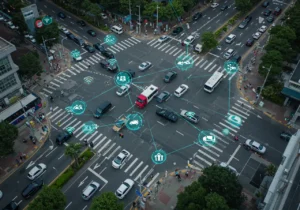
Some systems even integrate with traffic signals or crosswalk sensors, creating an ecosystem where every connected element contributes to pedestrian protection.
Why V2P Technology Is Becoming Essential
According to the National Highway Traffic Safety Administration (NHTSA), over 7,500 pedestrians were killed in vehicle-related incidents in 2023—the highest number in more than four decades. Urban areas, distracted walking, and high vehicle speeds all play a role. Traditional safety measures such as signage, speed bumps, and crosswalks are critical, but they can’t prevent every accident—especially those involving distraction.
Here’s why V2P systems are emerging as a crucial part of pedestrian safety:
- Early warning advantage: They detect hazards even before drivers or pedestrians are aware of danger.
- Integration with smart devices: Since most pedestrians carry smartphones, it’s possible to issue alerts through apps or built-in device functions.
- Reduction in human error: By supplementing human reaction times, V2P systems bridge the gap between perception and response.
- Scalable for urban use: When deployed in smart cities, V2P systems can connect with infrastructure like smart lights and adaptive traffic signals.
Benefits of Vehicle-to-Pedestrian Warning Systems
Adopting V2P systems can yield major benefits for all road users:
- Reduced collisions and fatalities: Real-time communication minimizes surprise encounters between cars and pedestrians.
- Improved driver awareness: Alerts remind drivers to stay vigilant, particularly in dense traffic or poor visibility conditions.
- Enhanced urban planning: Data collected by V2P systems can help cities identify dangerous intersections and improve design.
- Accessibility and inclusivity: V2P technology can be tailored for visually impaired pedestrians, providing audio cues when it’s unsafe to cross.
As 5G and edge computing continue to evolve, these systems are becoming faster, more accurate, and more reliable—laying the groundwork for accident-free mobility.
Challenges and Limitations of V2P Systems
While promising, V2P technology still faces several challenges before it can become widespread:
- Device dependence: Pedestrians must carry compatible devices to receive alerts.
- Adoption rates: Until most vehicles and smartphones adopt standardized V2P protocols, coverage will be inconsistent.
- Privacy concerns: Continuous communication between vehicles and pedestrians raises issues about location tracking and data security.
- System reliability: False positives or missed detections can undermine trust in the system’s accuracy.
Despite these obstacles, many automakers—including Honda, Hyundai, and Ford—are already testing V2P prototypes integrated into their next-generation vehicles. Meanwhile, smart city initiatives in Europe and North America are incorporating pedestrian sensors into traffic systems, paving the way for broader use.
Legal and Ethical Considerations
As with most technological innovations, legal frameworks are still catching up to V2P adoption. Some critical questions include:
- Liability: Who is responsible if an accident occurs despite a V2P alert—the driver, pedestrian, or manufacturer?
- Data ownership: Should the collected data belong to car manufacturers, municipalities, or individuals?
- Accessibility standards: How can regulators ensure V2P warnings are usable by people with disabilities?
Addressing these questions will be key to widespread acceptance of V2P technology as part of both traffic law and pedestrian protection strategies.
What Pedestrians and Drivers Can Do Now
 Even as V2P systems evolve, there are steps everyone can take today to make streets safer:
- Drivers: Stay alert in pedestrian-heavy areas and keep vehicle safety features updated. Many vehicles already include early pedestrian detection features.
- Pedestrians: Pay attention when crossing, use crosswalks, and avoid distractions. Enable location permissions for safety apps that might integrate with future V2P systems.
- City planners: Invest in smart infrastructure that can later integrate with V2P communication protocols.
The Road Ahead for Pedestrian Safety
By 2025, vehicle-to-pedestrian warning systems could become a cornerstone of safer, connected mobility. As cars, phones, and infrastructure learn to “talk” to one another, the potential for reducing accidents grows exponentially. Combined with pedestrian education, improved urban design, and stronger traffic enforcement, V2P systems represent the next step toward zero fatalities on our roads.
Pedestrian safety doesn’t have to rely on luck—smart technology and shared awareness can make every step safer.